Collecting
Byzantine Folles 101
5 min read · Denari Coins editorial
A great big M on the back, an emperor on the front, and often a date you can read. The follis is the friendliest door into Byzantine coins.

The Byzantine follis is one of the most beginner-friendly ancient coins there is: large, boldly designed, historically rich, and cheap. The reform of Anastasius I in 498 created a clear system of marked bronze denominations, and the follis — the 40-nummi piece — is the big one, often the size of a modern crown. Its reverse carries a giant letter M (the Greek numeral for 40), which makes the whole series instantly recognisable on a dealer's tray.
Reading the reverse
Byzantine bronze tells you its own value. The big mark of value is a letter: M for the follis (40 nummi), K for the half-follis (20), I for the decanummium (10), and E for the pentanummium (5). Around and beside it you will often find a mint mark in the exergue (CON for Constantinople, NIKO for Nicomedia, THEUP for Antioch/Theoupolis) and an officina letter. Once you can read the value mark and the mint, you can attribute most Byzantine bronze without a reference.
- M — follis, 40 nummi (the large coin).
- K — half-follis, 20 nummi.
- I — decanummium, 10 nummi.
- E — pentanummium, 5 nummi.
Coins you can date
Here is the feature collectors love: from Justinian I onward, many folles carry a regnal year. Look for ANNO (Latin for 'in the year') beside the M, with a Roman or Greek numeral giving the year of the emperor's reign — so 'ANNO XIII' means the thirteenth year. Combined with the known accession dates, this lets you pin many folles to an exact year, something almost no other ancient coin offers. It turns attribution into a small, satisfying puzzle.
Where to start
Justinian I (527–565) is the natural entry point: his reign produced large, handsome dated folles in quantity, especially the big module coins of the Nicomedia and Cyzicus mints. From there, collectors branch out to the dramatic facing-bust folles of the later period, the heavy issues of Justin II, or the chaotic, often crude bronze of the seventh-century crisis. Buy coins with a clear M, a legible date if you can find one, and a smooth patina — and you will have history you can read for very little money.
Advertisement
Browsing while you read? See certified coins in our vault →
Tools & references
Grading, supplies, and reference picks from trusted partners. We may earn a commission.
NGC
Submit your coins to NGC for certification
Grading from $23/coin
View at merchantPCGS
Grade & authenticate with PCGS
Tiered grading services
View at merchantWhitman
A Guide Book of United States Coins (the 'Red Book')
From $17.95
View at merchantDansco
Dansco coin albums for U.S. series sets
Albums & supplies
View at merchantAir-Tite
Air-Tite capsules & storage holders
Protect your coins
View at merchantAPMEX
Shop gold & silver bullion at APMEX
Live bullion pricing
View at merchant
New to coins & bullion?
Get our free starter series: the first-coin buyer's guide, how we authenticate every coin we sell, and $10 off your first order. A short email every couple of days — unsubscribe anytime.
Byzantine coins in stock
See all →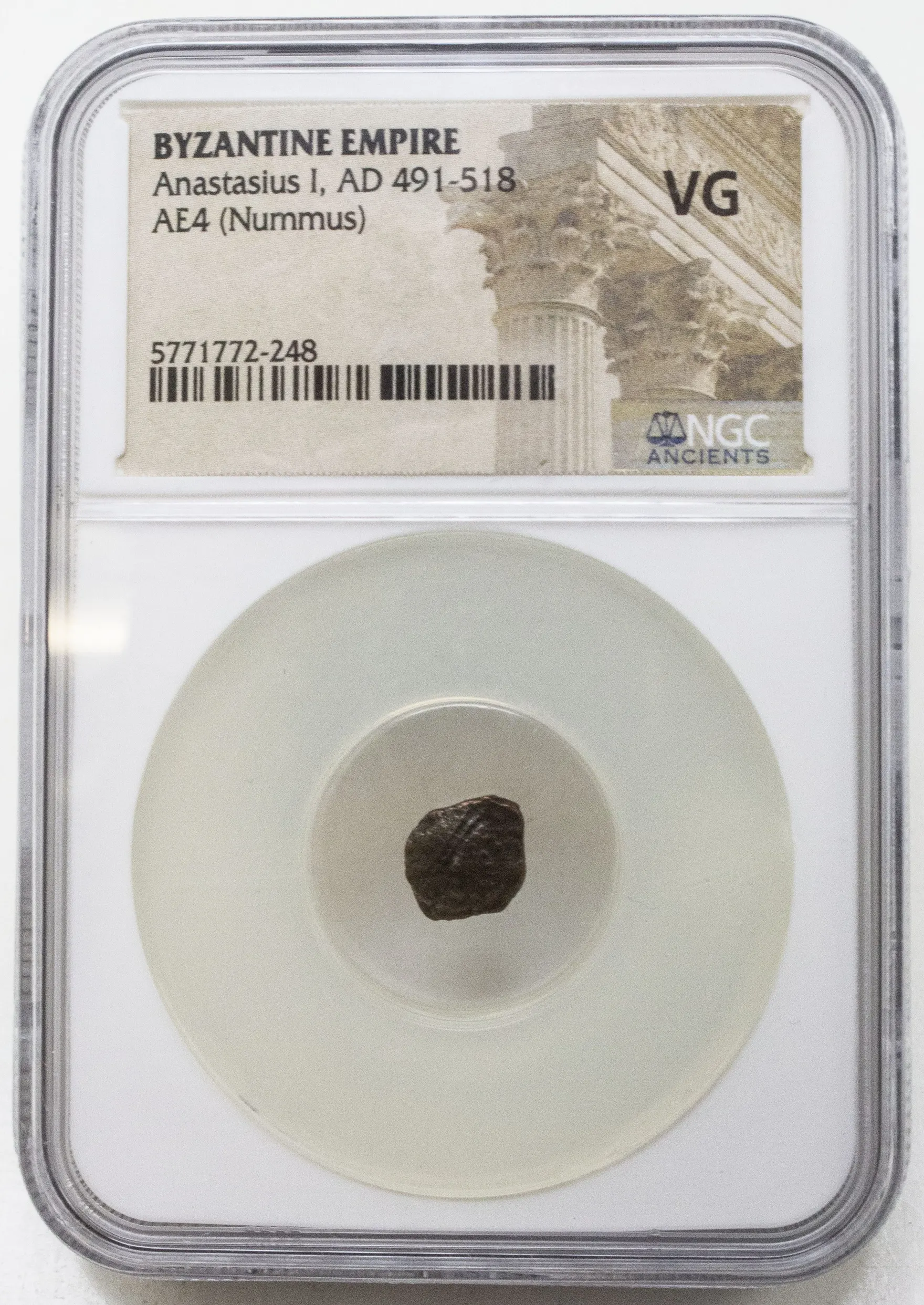 CollectibleNGC
Byzantine Æ4 (small bronze) of Anastasius I, AD 491–518
bronze · Æ4 (small bronze)
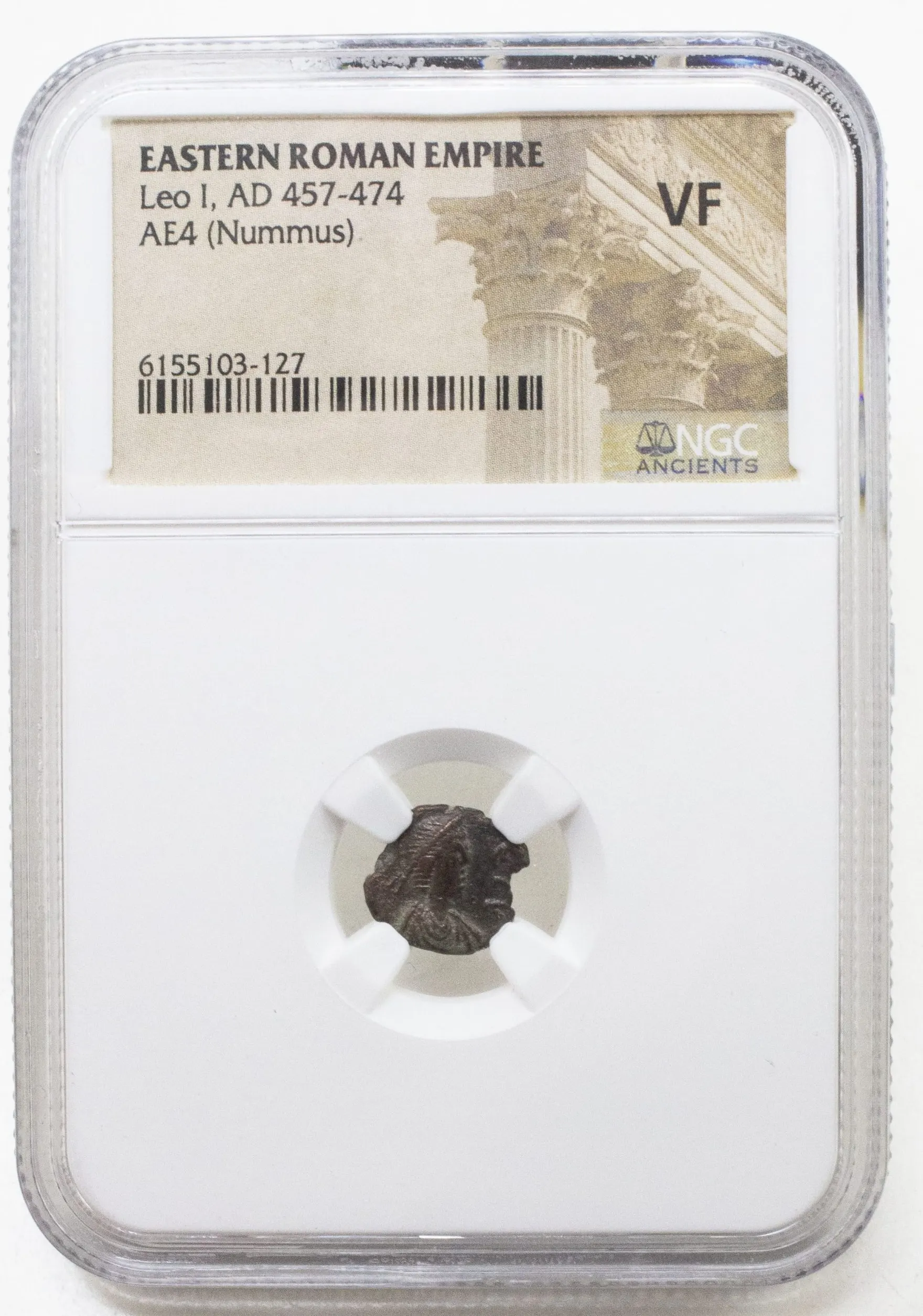 CollectibleNGC
Byzantine Æ4 (small bronze) of Leo I, AD 457–474
bronze · Æ4 (small bronze)
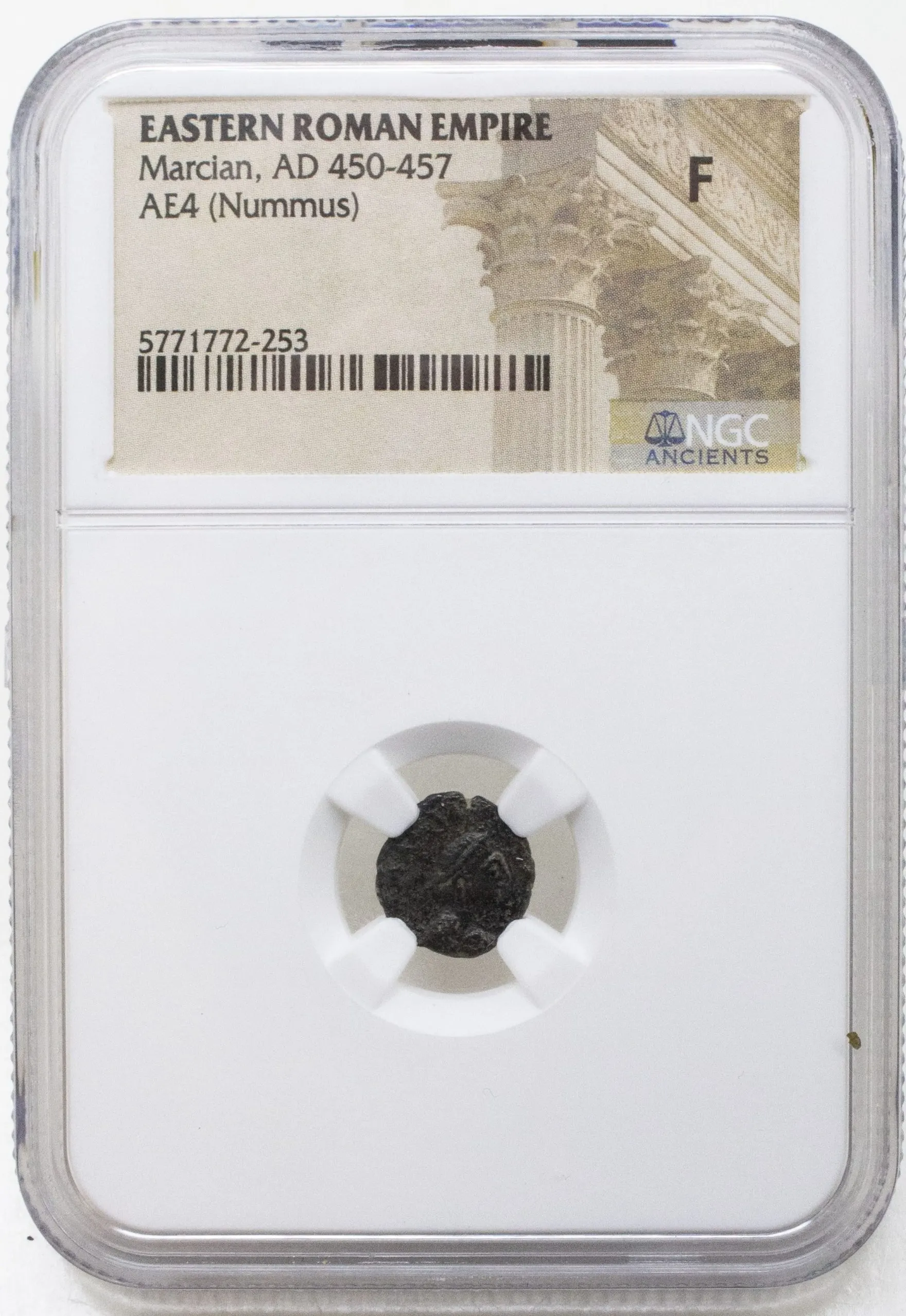 CollectibleNGC
Byzantine Æ4 (small bronze) of Marcian, AD 450–457
bronze · Æ4 (small bronze)