Buying & Authenticity
Are Widow's Mite Coins Real? (Yes — Here's What They Cost)
6 min read · Denari Coins editorial
The coin from the Gospel story is not a legend, a replica, or a museum exclusive. It's a real piece of ancient small change — and you can hold one for less than a dinner out.
Yes — widow's mite coins are real, and genuine ones are surprisingly affordable. The "mite" of the Gospel story is a small bronze coin called a prutah, struck in Judaea roughly a century before the scene it's famous for. They were minted in enormous numbers, they're still unearthed by the thousand in excavations, and an authentic example costs $40–$150 in honest collectible condition — with well-centered, clearly detailed pieces toward the top of that range and certified examples above it. Here's what the coin actually is, why it's so accessible, and how to make sure the one you buy is genuine.
What the widow's mite actually is
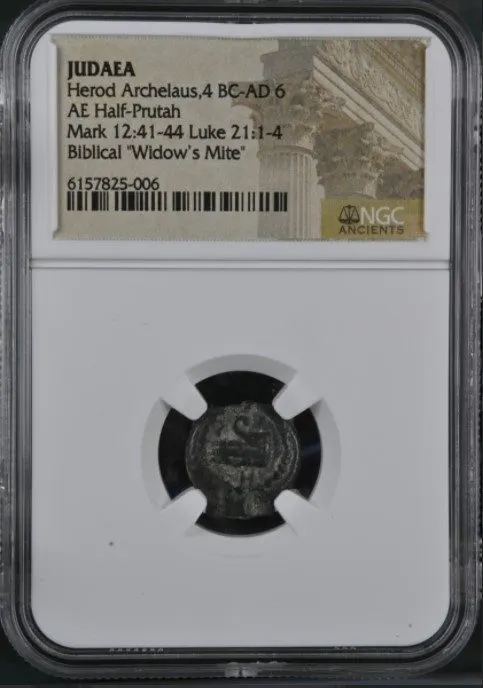
In Mark 12 and Luke 21, a poor widow drops two lepta — Greek for "small, thin ones" — into the Temple treasury, and the two tiny coins outweigh the gold of the rich. "Mite" comes from the King James translators, who reached for the smallest coin word English had.
The coins behind the story are the bronze prutot of Judaea, most of them struck under the Hasmonean king Alexander Jannaeus (103–76 BC) — about a hundred years before the Gospel scene, still circulating the way worn old pennies do. The classic design pairs an anchor on one side with an eight-pointed star or wheel on the other. You'll notice what's missing: a ruler's face. Jewish tradition prohibited graven images, so these are among the few ancient coins designed to offend no one.
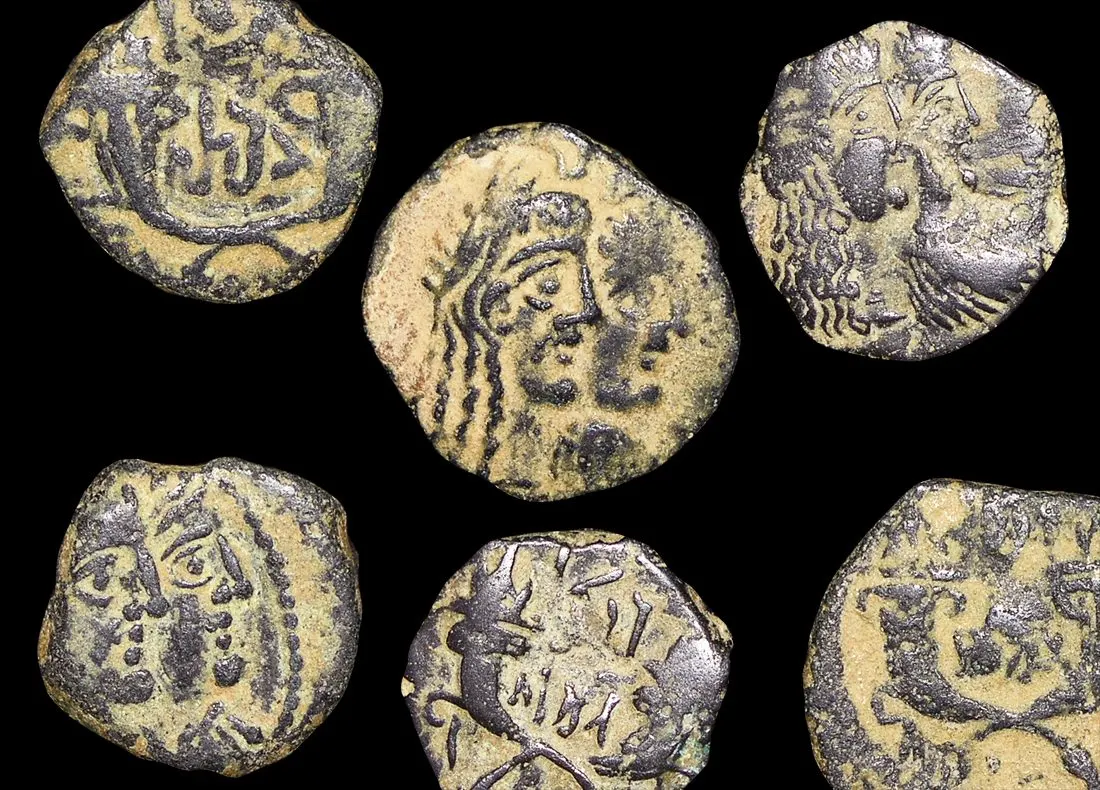
They are also, frankly, crude — struck fast on tiny irregular flans, often off-center. That's not damage; that's how they were born, and it's part of their honesty. A coin the size of your smallest fingernail, made to be nearly worthless, that became the most famous small change in history.
Why a 2,000-year-old coin costs less than dinner
Scarcity, not age, sets an ancient coin's price. Prutot were the everyday pocket change of Judaea, minted in the millions, and hoards keep surfacing — so supply is generous and prices stay friendly. Rough but identifiable examples trade around $40–$75; coins with a clear anchor, visible star, and pleasant surfaces bring $75–$150; exceptional or certified pieces run a few hundred dollars. For a coin with this much story, that's one of the best value-per-meaning ratios in all of collecting.
The catch: famous coins attract fakes
Because everyone has heard of it, the widow's mite is one of the most faked and fudged coins at the cheap end of the market. Three problems to watch for:
- Tourist-shop casts — modern copies with grainy, pimply surfaces and suspiciously identical strikes, often sold "from the Holy Land."
- Painted-on patina — bright modern metal under a coat of green; real patina is in the metal, not on it.
- Misattribution — generic (and cheaper) small bronzes sold at widow's-mite prices without any attribution to ruler or type.
How to buy one safely
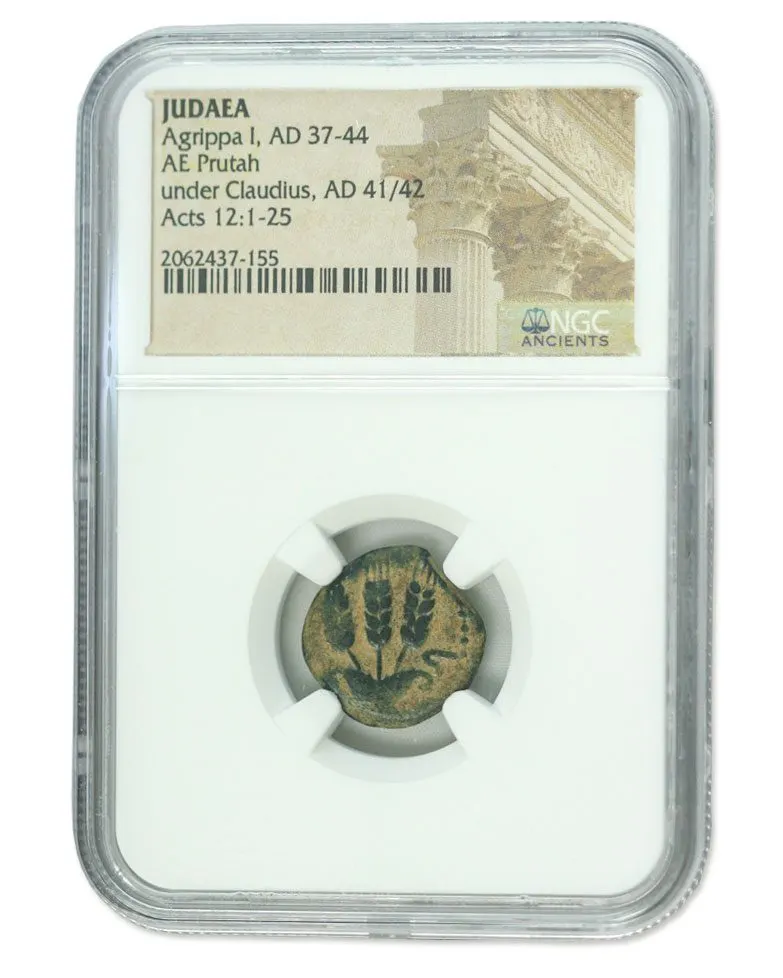
The same rules that protect you everywhere in ancients apply doubly here. Buy from a dealer who attributes the coin (ruler, type, reference number) rather than just calling it "Biblical." Expect the listing to show both sides, with weight and diameter. Prefer a seller who guarantees authenticity in writing with no time limit — or a coin in an NGC Ancients holder, which settles the question professionally (here's how their grading works). And treat any "genuine widow's mite" under about $30 with suspicion: at that price, it usually isn't.
One more distinction worth knowing: the widow's mite is not the "render unto Caesar" coin. That's the tribute penny — a silver Roman denarius of Tiberius, a different coin at a much higher price ($400+ in collectible grade). Together with a shekel of Tyre (the "thirty pieces of silver"), the three make a natural Coins of the Bible collection — three coins, one arc of the story.
A coin you can hand to anyone
Collectors love widow's mites for a simple reason: it's the rare ancient coin your non-collecting friends and family already know. That makes it the classic confirmation, ordination, graduation, or Easter gift — a sermon you can hold. We keep attributed, guaranteed examples in stock; browse the Biblical & Judaean case or get our free printable guide, Coins of the Bible: A Collector's Starter Guide, which covers all three coins of the set with current price ranges.
Advertisement
Browsing while you read? See certified coins in our vault →
Tools & references
Grading, supplies, and reference picks from trusted partners. We may earn a commission.
NGC
Submit your coins to NGC for certification
Grading from $23/coin
View at merchantPCGS
Grade & authenticate with PCGS
Tiered grading services
View at merchantWhitman
A Guide Book of United States Coins (the 'Red Book')
From $17.95
View at merchantDansco
Dansco coin albums for U.S. series sets
Albums & supplies
View at merchantAir-Tite
Air-Tite capsules & storage holders
Protect your coins
View at merchantAPMEX
Shop gold & silver bullion at APMEX
Live bullion pricing
View at merchant
New to coins & bullion?
Get our free starter series: the first-coin buyer's guide, how we authenticate every coin we sell, and $10 off your first order. A short email every couple of days — unsubscribe anytime.